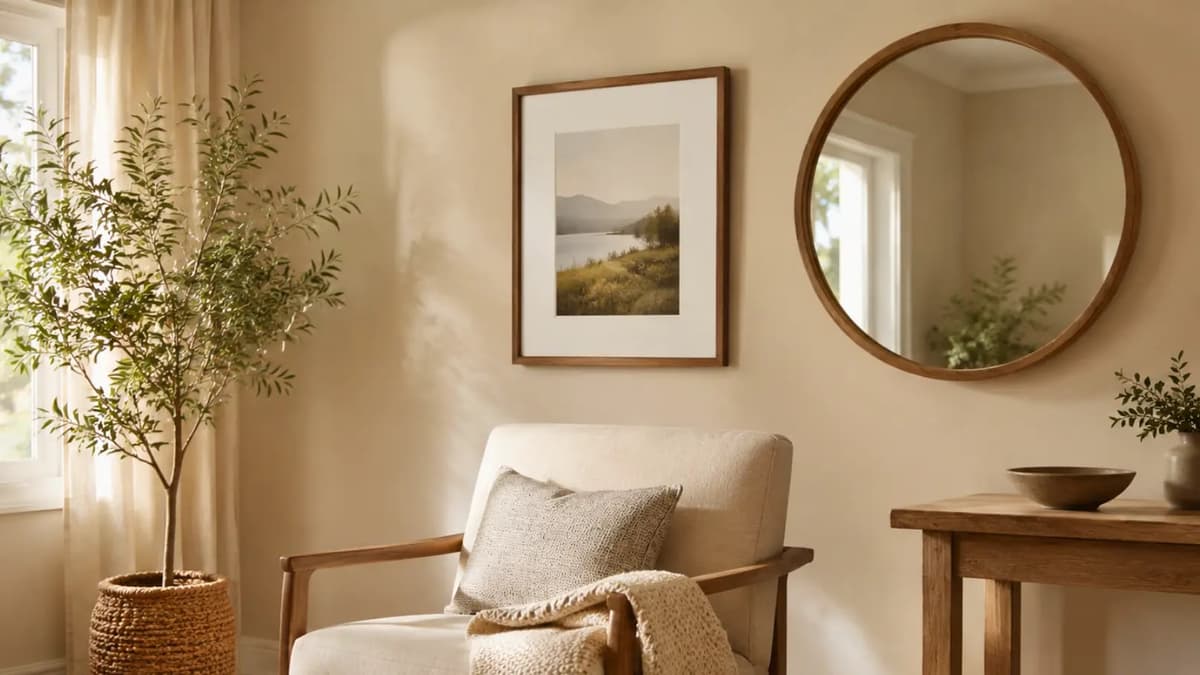
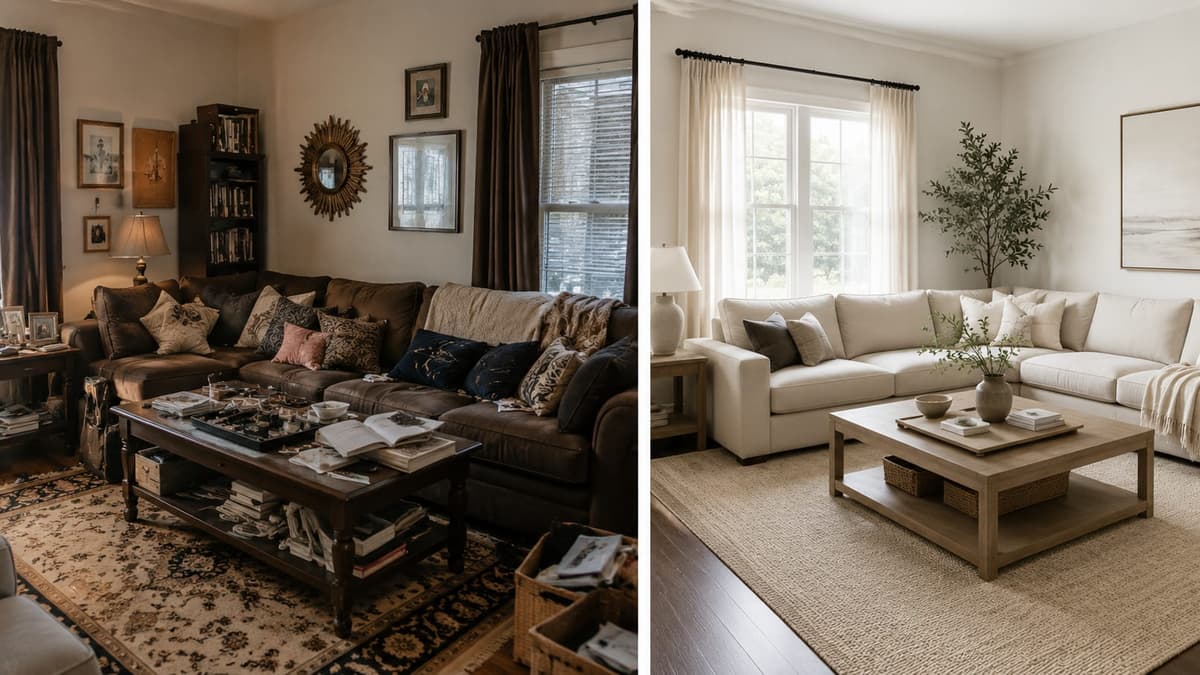
If you're renting, or you just don't love the idea of putting holes in a wall you might want to change your mind about later, hanging wall decor without nails is easier than most people expect. The right method depends mostly on two things: how heavy your piece is, and what kind of wall you're working with.
This guide walks through the best nail-free options for every situation, from a lightweight print to a full-size mirror, so you can decorate confidently without worrying about your deposit or your paint. If you're still figuring out what look you're going for, it's worth reading Home Decor Styles Explained: Which One Fits You? First, knowing your style makes it much easier to choose what to hang and where.
Why Go Nail-Free?
Skipping nails isn't just about protecting your security deposit. It also gives you the freedom to move things around whenever your style changes, without patching and repainting every time. If you rent, this matters even more since many leases hold you responsible for wall damage when you move out.
Even if you own your home, nail-free methods are worth considering for smaller decor changes, rotating seasonal pieces, or anywhere you're not ready to commit to a permanent placement.
Know Your Wall and Weight Before You Start
Before choosing a method, it helps to understand what you're working with.
Check your wall type. Painted drywall is the easiest surface for adhesive products. Brick, tile, wallpaper, and heavily textured walls each need a slightly different approach, which we'll cover below.
Weigh your piece. As a general guide:
Under 5 lbs: lightweight frames, small prints, paper posters
5–15 lbs: medium frames, small mirrors, canvas art
15+ lbs: large mirrors, heavy frames, oversized art
Most adhesive product packaging lists a maximum weight, so it's worth checking before you commit to a method rather than after something falls.
Best Methods for Lightweight Decor
For anything light, like a small print or a paper poster, the simplest adhesive options work well.
Command strips or poster strips are the most common choice, and they're widely available in sizes rated for different weights. Poster putty is another option, especially for temporary displays like dorm rooms, though it's better suited to paper than framed pieces. Decorative or washi tape can double as both a hanging method and a design element if you're going for a more relaxed, collage-style look.
Best Methods for Medium-Weight Decor
Once you're working with something heavier, like a mid-size framed print or a small mirror, you'll want a stronger hold.
Heavy-duty adhesive strips rated for 10 to 20 lbs are the most reliable option here, and they still remove cleanly when you're ready to take the piece down. Adhesive hooks are worth considering if your piece has a wire or sawtooth hanger on the back, since the hook gives you a bit more flexibility with positioning than strips alone.
One thing to keep in mind: most manufacturers recommend waiting a full 24 hours before hanging anything on freshly applied strips, so plan your timeline accordingly if you're decorating ahead of a specific date.
Best Methods for Heavier Pieces
Larger mirrors, oversized frames, and heavier decor need a bit more support, but there are still nail-free options that hold up.
Velcro-style hook-and-loop fasteners are a good step up from standard strips, with some rated to hold well over 15 lbs when you use multiple sets across the back of a frame. Tension rods are worth considering for tapestries, textile art, or fabric wall hangings, since they wedge between two fixed points or mount with minimal hardware and distribute weight along the rod rather than a single point. Leaning displays, whether that's a large piece resting against the wall on the floor or on a mantel, sidestep the weight question entirely and have become a popular, low-commitment styling choice in their own right.
Hanging on Tricky Surfaces
Not every wall is smooth painted drywall, and that changes your options.
Brick and textured walls are difficult for most adhesive strips, since they need a flat, smooth surface to bond properly. Tension rods, freestanding easels, or hooks designed specifically for mortar lines tend to work better here. Tile and glass actually hold adhesive strips quite well, as long as the surface is clean and free of soap residue before application. Wallpaper is one of the trickiest surfaces, since removing adhesive can sometimes lift the paper with it. If you're decorating over wallpaper, testing in an inconspicuous spot first, or leaning instead of adhering, is the safer choice.
How to Get It Straight (No Level Needed)
Even with the right hanging method, a crooked piece can throw off the whole look, and placement is where a lot of nail-free displays go wrong. Uneven spacing, hanging too high, or centering on the wall instead of your furniture are common issues covered in 11 Wall Decor Mistakes That Make Your Home Look Cheap (And How to Fix Them), and they matter just as much whether you're using nails or not.
A simple trick: place a strip of painter's tape along the top edge of your frame before hanging it, and use it to mark your spacing on the wall. For larger arrangements, cutting paper templates to the exact size of each piece and taping them up first lets you experiment with placement and spacing without committing to anything. Once you're happy with the layout, you can hang the real pieces exactly where the templates were.
Removing Wall Decor Without Damage
Most adhesive products are designed to come off cleanly, but the technique matters. Hold the top of the strip or hook, and pull slowly and steadily straight down, parallel to the wall, rather than pulling outward. This releases the adhesive gradually instead of tearing at the paint.
If a strip won't budge, a hair dryer on low heat held a few inches away for a few seconds can soften the adhesive enough to help it release.
Frequently Asked Questions
Can Command strips hold heavy wall decor?
Yes, heavy-duty versions are rated up to 20 lbs per set, which covers most medium to large framed pieces. For anything heavier, using multiple sets or switching to a tension rod or leaning display is worth considering.
How do you hang decor on textured or brick walls?
Standard adhesive strips generally don't bond well to brick, stucco, or heavily textured surfaces. Tension rods, specialty mortar hooks, or simply leaning the piece tend to work better in these cases.
Will adhesive strips damage my paint?
When removed correctly, most adhesive strips come off cleanly. Pulling slowly and straight down, rather than outward, is the key step that prevents peeling.
How much weight can velcro strips hold?
It depends on the product, but many heavy-duty versions are rated to hold around 15 to 16 lbs per set when applied correctly to a smooth surface.
What's the best nail-free option for a rental?
Adhesive strips and hook-and-loop fasteners are usually the top choice for rentals, since they're specifically designed to remove without damage. Leaning displays are also a low-risk option if you'd rather avoid adhesives on the wall altogether.
Final Thoughts
You don't need a drill, a hammer, or a stack of patch kits to make your walls feel finished. Whether you're working with a single light print or a full gallery wall of mixed pieces, there's a nail-free method suited to the weight and surface you're dealing with. Start with what you have, test your placement before committing, and you'll likely find that damage-free decorating holds up just as well as the alternative.
Related reading: 11 Wall Decor Mistakes That Make Your Home Look Cheap (And How to Fix Them)
Home Decor Styles Explained: Which One Fits You?